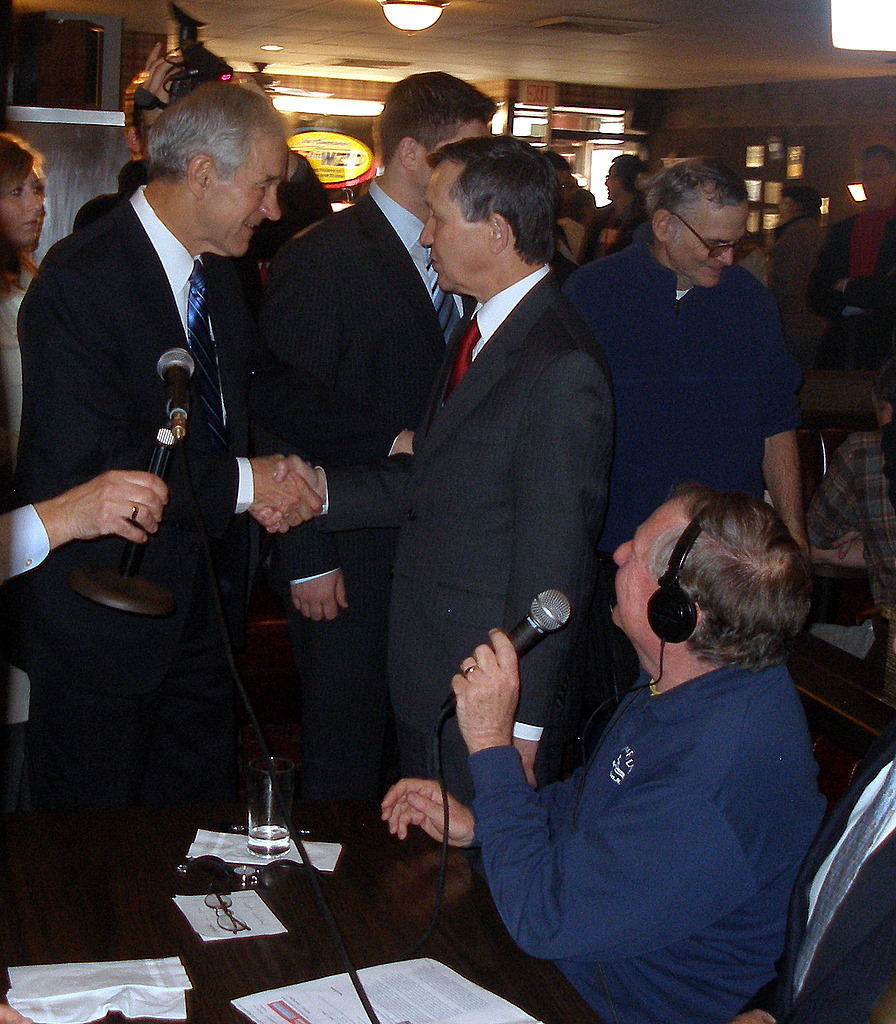
This really brought down the house at the Smart Sense Health Care town hall in Salem, last evening. I think you'll understand why...
And hell, who doesn't love taking a few shots at les vegetarians, no?
This really brought down the house at the Smart Sense Health Care town hall in Salem, last evening. I think you'll understand why...
And hell, who doesn't love taking a few shots at les vegetarians, no?

If you're a leftist, you may as well move on now, because I'm going to explain exactly why compassion is not necessarily good. This will cause your head to explode, so in the interest of your personal safety, you should leave.Are you still in, readers?
My parents were out here for a visit a few years ago, and one of Dad's observations was that Oregon has so much food, growing everywhere - even in the urban areas - that it would be almost impossible to go hungry during the summer months. He was right.Please discuss.
Unless you're absolutely a sloth, you really can't go hungry. Nuts and berries grow in almost every neighborhood in which I've lived or visited. To supplement, there are edible native plants in abundance, as well as - in the urban areas - food distribution centers.
The only way someone can go hungry here is if they sit on their fat ass and demand that others bring stuff to them.
Sure, and you may have to get hands dirty by picking nuts and fruits, by participating in one of the many gleaning programs, or otherwise working to feed yourself and your kin, if any. But forty+ years ago, finding myself out of work for a time and with few actual possessions such as telephone or tv, I lived in Forest Park for a couple of months - a mere jaunt to downtown Portland.
It involved a bit of work, as I had to fabricate a small shelter - but it was well-camoed and actually had quite a spectacular view from the entrance. I harvested quite a number of edible native plants and obtained water from a nearby spring. Perhaps the greatest amount of work involved digging a privy; difficult to do with but small tools and hands.
Of course, as the economy improved I was able to secure work, leave the park, and build things up. I now live in a house, complete with mortgage, in Portland's West Hills.
Nothing was given to me. I worked for everything, however meager it may have seemed at the time.
And if I can do it, surely then others can as well.
I'm not advocating that everybody move into the park and start digging privies and setting snares, but there are far more private social services in play now than there were 40 years ago. The one factor that remains is this: you have to be willing to do at least some work.
"Free" meals served year-round at schools simply undermines the values of self-reliance and personal responsibility; supplanting them with a "somebody owes me" mentality.
So begins the Wrestlemania III-style ballot referenda warfare that will define my dissertation research and, sorry in advance, a lot of my blogging in the weeks to come.
The big news here being that Oregon's own Norquist-y, anti-tax Wrecking Crew is evoking that socialist Barack Obama as a voice of marcoeconomic reason! Here's to six more months of escalating cognitive dissonance!
Chuck Grassley Gives Up The Game
In an interview with The Washington Post, Chuck Grassley said that the town hall meetings have convinced him to revisit the breadth and scope of what the Gang of Six is considering. The calls for reform are "not quite as loud as people that say we ought to slow down or don't do anything," Grassley said. " And I've got to listen to my people."
So that's it then. A bipartisan bill is a smaller bill. The search for compromise hasn't led to a compromise bill. Rather, it's leading to a call for compromising on what was supposed to be the compromise....
[read the full EZRA KLEIN article.]
Now when do we enter the post-post-politcal phase? When do we stop pretending that class/race/gender antagonisms, among others, aren't more constitutive than the universalist tents we're trying to crowd everybody under? More on this soon.
Blogger lex dexter said...
EZ, Are the progressive and populist traditions reconcilable?
August 3, 2009 3:41 PM
Rick talked about some other things that were equally fascinating, particularly the issue of why the demagogic rhetoric of the right seems to work so well:
You can't "demand" that people be more logical. Emotion is part of the human animal. What I would have liked to have seen, as an advocate of healthcare reform, is for Obama and the rhetoric to COMBINE rational appeals with emotional ones--like FDR and and Truman and LBJ did so effectively in their own attempts to pass progressive legislation. They roused people in their lizard-brains, too, just for progressive ends. Read a book about the 1948 presidential election--Truman made arguments in a very blunt, emotional style...
And he mentions my biggest pet peeve -- the sell-out on populist economic issues, which should naturally belong to the left right now and is instead (dangerously) being appropriated by the right:
Somewhere along the line Democrats lost a sense of their natural power base--which is the fact that their ideas are economically beneficial to the vast majority. Acknowledging this fact became "demagoguery." Conservatives convinced them it was "class warfare." They became afraid of their simplest and most powerful message. All the other timidity follows from that.
In our country, populism has almost always been caught up in race and nativism, but it didn't have to be that way this time. The democratic Party's ties with corporate America cause a great deal of this problem to be sure, but I agree with Rick that much of this is sheer Pavlovian reflex. They are afraid to say the truth. The right is unafraid to lie. And that leads to a distorted political dialog that nobody can understand. And into that void, the scare tactics have a distinct advantage.
the term "progressive" is equally ambiguous, and is associated with at least two relatively distinct philosophical traditions. Although these two "progressivisms" share common ground on many (probably most) issues, they are at loggerheads on some others, as has perhaps become more apparent since the election of President Obama.
The first type of progressivism has its philosophical underpinnings in 18th Century, Enlightement-era thought. It believes that politics is a battle of ideas. It further believes that through the use of reason and the exchange of ideas, human society will tend to improve itself through scientific and technological innovation. Hence, it believes in progress, and for this reason lays claim to the term “progressive”. Because of its belief and optimism in the faculties of human reason, I refer to this philosophy as rational progressivism.
Rational progressivism tends to be trusting, within reason, of status quo political and economic institutions -- generally including the institution of capitalism. It tends to trust these institutions because it believes they are a manifestation of progress made by previous generations. However, unlike conservatism, it also sees these institutions as continuing works in progress, subject to inefficiencies because of distorted or poorly-designed incentives, poorly-informed or misinformed participants, and competition from 'irrational' worldviews like religion. It also recognizes that certain persons who stand to benefit from preserving the status quo, particularly elected officials but also corporations, may seek to block this progress to protect their own interests. The project of rational progressivism, then, is to propagate good ideas and to convert them, through a wide and aggressive array of democratic means, into public policy.
The second type of progressivism is what I call radical progressivism. It represents, indeed, a much more radical and comprehensive critique of the status quo, which it tends to see as intrinsically corrupt. Its philosophical tradition originates in 19th Century thought -- and specifically, owes a great deal to the Marxist critique of capitalism and the Marxist theory of social change. It also finds inspiration in both the radical movement of the 1960s and the labor and social movements of late 19th and early 20th centuries (from which it borrows the label "progressive").
Radical progressivism is more clearly distinguishable from "conventional" liberalism and would generally be associated with the "far left" -- although on a handful of issues such as free trade, it may find common cause with the "radical" right. Radical progressivism embraces the tradition of populism and frequently adopts a discourse of the virtuous commoner organizing against the corrupt elite. It is much more willing to make normative claims than rational progressivism, and tends to view conservatism as immoral and contemporary American liberalism as amoral (at best). Its project is not reform but transformation.
Rational progressives sometimes regard radical progressives as impractical, self-righteous, shrill, demagogic, naïve and/or anti-intellectual. Radical progressives, in turn, regard rational progressives as impure, corrupt (or corruptible), selfish, complacent, elitist, and too quick to compromise.
As you'd probably expect, the Senate Finance Committee is moving toward dropping coverage of end-of-life counseling from its bill entirely. Luckily, the committee's ranking member, Chuck Grassley, has some advice for those who are confused about such things as "living wills" and "advance directives" and "full and aggressive treatment."I think the best thing to do is if you want people to think about the end of life, number one, Jesus Christ is the place to start, and after that, in the physical life, as opposed to your eternal life, it ought to be done within the family and considered a religious and ethical issue and not something that politicians deal with.
Visit msnbc.com for Breaking News, World News, and News about the Economy
What I think is going on here, at least partly, is that the peddlers of anti-progressive lies are managing to convince a certain kind of American — white, socially conservative, etc. — that the hate-mongers are people like them; and, even more important, that progressives are Those People, people not like them.
Obama’s skin color makes this easy; but the Clintons faced the same kind of thing. Why? Well, the old line about Clinton being the first black president gets at something: even if Bill Clinton had a regular skin and name, he was obviously comfortable with people who didn’t, which made him one of Them.
And anti-intellectualism is also part of it.
In any case, it’s scary: you’ve got a good segment of the American population that is completely impervious to any kind of evidence, any rational argument. I mean, who collects statistics? People in black helicopters!
One of the three Republican senators working on a bipartisan health care bill perpetuated a particularly outrageous untruth about the legislation on Wednesday. Appearing at a town hall in his home state of Iowa, Sen. Chuck Grassley told a crowd of more than 300 that they were correct to fear that the government would "pull the plug on grandma." "There is some fear because in the House bill, there is counseling for end-of-life," Grassley said. "And from that standpoint, you have every right to fear. You shouldn't have counseling at the end of life. You ought to have counseling 20 years before you're going to die. You ought to plan these things out. And I don't have any problem with things like living wills. But they ought to be done within the family. We should not have a government program that determines if you're going to pull the plug on grandma."Let's.Take.This.Opportunity.To.Abandon.The."Bipartisanship."Bullshit.
Visit msnbc.com for Breaking News, World News, and News about the Economy
You're asking us to trust turning power over to the government, when there clearly are people in America who believe in -- in establishing euthanasia, including selective standards.
While the unemployment rate fell by 0.1 point to 9.4%, the first decline since April 2008, it looks like a lot of people have given up the job search as hopeless, meaning they’re no longer counted as officially unemployed. And the ranks of the unemployed are increasingly dominated by people who’ve been jobless for half a year or more—people whose prospects for re-employment in the future are usually quite damaged by these long spells outside the labor force.So while there are some signs that the recession is drawing to a close—an impression confirmed by the drop in first-time claims for unemployment insurance last week—the job market is still awful, and the recovery that’s likely to follow the end of the recession sometime later this year will almost certainly be very weak and not very joyful. The U.S. economy has some serious structural problems that aren’t even being discussed, much less addressed.
 But I guess it's hard to find time to discuss "serious structural problems" amidst all of this latent xenophobe-qua-deficit-hawk Tea Partying? Between this and the Diana from OR vid [see below]. I feel like our political culture has less depth than, say, an average NFL Films presentation from the late 1960s.
This is what I mean when I say "creepy."
Hello, my name is Diana and I'm calling from Oregon.
I just wanted to let the SEIU know that America is watching the thug tactics that you folks are using at health care meetings and various other public places, and the absolutely thuggish violent tactics that your group is using.
I suggest you tell your people to calm down, act like American citizens and stop trying to repress people's First Amendment rights. That, or you all are gonna' come up against the Second Amendment.
Stop the violence.

I am particularly interested in those individuals who decide it's time to put on the historical garb. This is about as close to a set of Tea Party 'first principles' as I've so far found.
"If you decide to do nothing again, then buy a gun. You'll need it."
 In a sweeping, communist-er than thou tirade against the four of five Anglo-American 'left' journals with readerships greater than 200, The Commune arrives upon that beloved OG tackling dummy, John Bellamy Foster, and spews forth fire:
To borrow a catch phrase from Nick Cohen: what’s left of the left? Not much it seems once we plunge into the depths of the other journals floating about out there. A glance across to the U.S. publication, the Monthly Review, might indicate that we are looking at the journal of New Maoist thought – and that would be the Mao of the Great Leap Forward, rather than the Mao of the Cultural Revolution. The entire issue for July to August 2009 is devoted to agriculture, “food sovereignty,” land reform and, or course, the relevance of climate change to all these matters. The May 2009 issue even has a favourable review of a book of Mao’s poetry. It seems that under John Bellamy Foster’s editorship (author of the fraudulent “Marx and Ecology”) the Monthly Review is becoming entirely devoted to slightly left of liberal North American thought: climate change, anti-Zionism, anti-war. Anything, it seems, than engagement with the working class, the labour movement and the promotion of communist ideas.I know what yr thinking, and yr right! Why accuse a man and his (marxist) organ, of Maoism, when the far more damning charge is that of irrelevance? Probably because you're a self-identifying communist raging against the non-revelation that actually existing 'marxism' in this Northern hemisphere is largely, lamentably, of an academic sort.
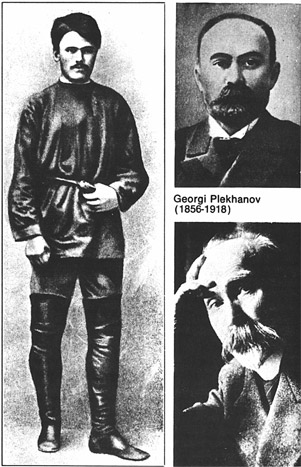 Yep, even accessible, less-than-parochial marxist clearing-houses like MRZINE are rarely accessed by exactly the folks parochial marxists wish were accessing 'em {-- and that sucks big phlegm-sodas outta cat-sacks, don't get me wrong.} But at l'end of le day, even less accessible* is the cliquish ur-theory that'd cast Foster's eco-marxist imaginings as not just 'wrong,' 'dumb,' or 'ill-conceived,' but instead as "fraudulent."
 Nobody loves the Fed, and why would they? But shite, shucks, I cannot say I fear le Fed so much as I fear, say, the CIA.
In 2003, the slight majority of Americans, 53%, said the Federal Reserve was doing an excellent or good job and 5% called it poor. Today, 30% of Americans praise the job the Fed is doing, while nearly as many, 22%, call it poor. While this ratings downturn coincides with a substantial drop in consumer confidence toward the U.S. economy over the same period, it is unclear how much of the Fed's image decline is due to the general decline in the country's economic climate, as opposed to specific perceptions about the agency's performance in carrying out its monetary responsibilities and possibly its role in the crisis surrounding U.S. financial markets. The Fed's low excellent/good rating may also reflect the higher-than-average percentage of Americans having "no opinion" about this arm of the government, relative to the other agencies rated.